


The Monetization Myth: A Few Things New Creators Should Research
Why "Borrowed" Content Is NOT Victimless
Perhaps ethical standards are the better place to begin this discussion, but there are also rules, policies, and laws we must all abide by. With so much information at our fingertips, some seem to treat these obligations as mere suggestions. They are not.
When a person, group, or business generates income through content monetization, advertising, bonuses, or sponsorships, they cannot assume that someone else's creative work is free for the taking simply because it is available online. Using another person's work for profit raises important questions about ownership, permission, ethics, and accountability. Ignorance of applicable laws and policies does not necessarily excuse violations.
Interestingly, as we began researching this issue, we discovered several laws and platform policies we weren't entirely familiar with. We are continuing that research to better understand the dos, don'ts, and sometimes complicated gray areas of being a "digital creator." We believe others could benefit from that knowledge, too.

The following five laws stood out to us as particularly relevant to monetized content creators. This is not an exhaustive list, and the existence of these laws does not mean every questionable practice constitutes a legal violation.
Five Laws Monetized Content Creators Should Understand:
The Copyright Act of 1976, 17 U.S.C. §§ 106 and 501. Protects original photographs, journalism, writing, and other creative works against unauthorized reproduction, distribution, and other infringing uses. AI-assisted copying can potentially infringe copyright. Fair use, licensing, and other exceptions may apply.
The Digital Millennium Copyright Act (DMCA), 17 U.S.C. § 1202. Prohibits certain intentional removals or alterations of copyright-management information, including author and ownership information, when the statutory knowledge requirements concerning infringement are met. Simply failing to credit a source does not automatically violate this law.
Kentucky's Right-of-Publicity Statute, KRS § 391.170. Protects deceased public figures against certain unauthorized commercial uses of their names and likenesses for 50 years after death. Kentucky also recognizes common-law protections for living individuals. Legitimate news reporting and biographical expression receive constitutional protection,
The Federal Trade Commission Act, 15 U.S.C. § 45. Prohibits unfair or deceptive acts or practices in commerce. This includes advertising that materially misleads consumers about its commercial nature. Sponsored posts may require clear disclosures, depending on their presentation and the impression they create.
The Lanham Act, 15 U.S.C. § 1125(a)(1)(A). Addresses false or misleading commercial representations likely to confuse consumers about affiliation, sponsorship, or approval. For example, promotional materials that falsely imply a celebrity endorses a business may raise concerns under this law. Simply featuring a celebrity's biography alongside an identifiable advertisement does not automatically establish a violation.
These laws address different forms of potential misconduct. Their applicability depends on the circumstances, and discussing them does not establish that any particular publisher, advertiser, or monetized page has violated the law. Using AI, publishing celebrity biographies, earning advertising revenue, and accepting sponsorships are not inherently unlawful.
This commentary and accompanying examples highlight a few of the potential legal boundaries, ethical responsibilities, and platform policies governing these practices.
Here are a few things to consider:
Copyrighted Images are NOT Free for the Taking. Most photographs are protected by copyright, even when they appear in public searches or on social media. Commercial publishers generally need appropriate permission, a license, or another lawful basis for using them. Public-domain images, certain Creative Commons licenses, and fair use are important exceptions, but must be understood. When one starts making money from a product, proper practice is in order. Simply finding a photograph online does not establish permission to reproduce it.[i]
Facts are Public. Someone Else’s Writing is NOT. Nobody owns the historical facts about anything, including a celebrity or public figure's life. However, copying substantial portions of another writer's protected expression can constitute infringement. Changing a few words or running an article through AI does not necessarily make the resulting work original. Attribution is an important journalistic practice, but even giving credit does not replace permission when permission is legally required. More on this in a minute.[ii]
Public Figures' Identities are NOT Automatically Available for Commercial Promotion. Reporting on a public figure is generally protected expression. Using that person's identity in advertising, particularly in ways that suggest endorsement or affiliation, raises different legal considerations. For instance, Kentucky law specifically protects deceased public figures against certain unauthorized commercial uses of their names and likenesses for 50 years after death. Distinguishing legitimate biographical coverage from commercial exploitation is important. In Montgomery v. Montgomery (2001), the Kentucky Supreme Court considered whether country music star John Michael Montgomery unlawfully used his deceased father's image and voice in a music video without permission from his father's estate. The Court ruled in his favor, finding the tribute was protected artistic expression. However, the Court's decision illustrates that the context and nature of how someone's identity is used can determine whether the use violates right-of-publicity law.[iii] [iv]
Sponsored Content MUST Be Transparent. Related, but distinct from the last point, the Federal Trade Commission requires advertising to be presented in ways that do not mislead consumers about its commercial nature. Identifying a sponsor is important, but publishers must also consider the overall impression their presentation creates for the reader/consumer. Featuring a celebrity alongside an advertisement should not suggest that the celebrity endorses the advertised business. Kentucky law recognizes protections against certain unauthorized commercial uses of a living person's name or likeness. Furthermore, KRS 391.170 specifically extends right-of-publicity protections to deceased public figures for 50 years after death, as noted in the Montgomery v. Montgomery (2001) example. These protections must be balanced against constitutional rights to freedom of expression, including legitimate news reporting and biographical coverage. Legitimate biographical reporting is generally protected, but using someone's name or likeness as a disguised commercial advertisement may cross a legal boundary, or at the very least be called into question.[v]

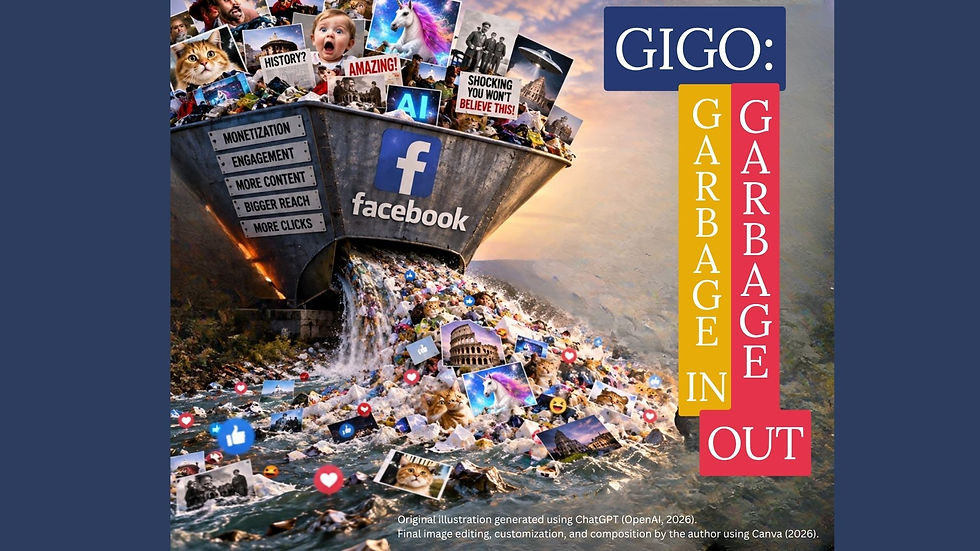
AI Scraper Research Does NOT Eliminate Copyright or Editorial Responsibility. This issue has impacted us directly. While we support using AI to assist with research, drafting, and editing, we do not support entering a prompt, accepting the response without due diligence, and passing the result off as original work. We conduct research, pay for specialized tools, services, and stock imagery, interview people, ask questions, verify sources and information, and synthesize our findings to inform the public. Our original reporting and creative work are not an open invitation for monetized accounts to reproduce our content and profit from it. We recognize that historical facts are available for everyone to report, although the original expression used to present them may be protected by copyright. There is a difference between independently researching a story and simply repackaging someone else's work without acknowledgment. Our work is clearly marked, and we believe those who rely on another creator's research should acknowledge that contribution. Appropriately. If AI reproduces someone else's protected material, responsibility does not disappear because a machine generated the response. The publisher is responsible for checking accuracy, identifying sources, providing appropriate attribution, and obtaining permission when legally required. AI does not automatically authorize the reuse of copyrighted material or make substantially copied writing original. We invest our time, resources, and creativity to produce meaningful content, not to provide a free production service for someone else's monetized content. We take this stand across several programs and projects, not just for ourselves, but for independent researchers, journalists, photographers, historians, and other creators who invest in original, meaningful work. Publishing high volumes of recycled content without independent contribution raises serious questions about editorial integrity. Meta's own originality guidelines discourage duplicative or minimally transformed content and warn that persistent violations can affect monetization. Frankly, it is infuriating to invest in original research and reporting, receive no content-monetization revenue ourselves, and then watch others potentially profit from repackaging that same work. There is nothing wrong with using AI responsibly or earning money from original content. There is nothing wrong with responsibly using someone's work to build on your own, or asking permission. But there is something fundamentally wrong with building a business model around the creative labor of others while contributing little of your own.[vi]
One More for Good Measure

Undisclosed Paid Partnerships May Violate Certain Platform Rules: Let’s take Facebook for example. Meta allows creators to earn money from their content, but it also has rules governing paid business partnerships. When a publisher receives compensation to feature or promote a business, Meta generally requires the business partner to be tagged through its branded-content tools, producing a visible "Paid Partnership" label.[vii]
Simply inserting a sponsor's advertisement into a celebrity biography does not necessarily satisfy Meta's labeling requirements.
And there's another concern: The Federal Trade Commission requires commercial relationships to be disclosed clearly and conspicuously so audiences can distinguish advertising from independent content.[viii]
When a page presents itself as a source of local history, entertainment, or news while earning revenue from sponsored promotions, transparency is essential.
A monetized page should not get a pass on the very advertising standards other creators and businesses are expected to follow.
The Bottom Line:
Of course, monetization is not evidence of wrongdoing, and sponsored public figure and celebrity features are not automatically unlawful. Whether a particular post violates anyone's rights depends on its sources, permissions, presentation, and circumstances.
But earning money from content should come with accountability.
If someone else's photography, writing, or research is attracting the audience that generates your revenue, you should be prepared to explain what rights you have to use it. You should also be able to rigorously defend the content you share as your own and explain the value you're contributing. Period.
Independent creators and legitimate journalists invest substantial time and resources in their work. Their contributions deserve recognition and protection.
If you use something I have personally researched and written, be ready to be put on the spot, and don't think an answer of, "Google it," makes me go away.
Notes
[i] U.S. Copyright Office, “Fair Use (FAQ),” accessed October 30, 2026
[ii] U.S. Copyright Office, “Fair Use (FAQ),” accessed October 30, 2026
[iii] KRS § 391.170, “Commercial Rights to Use of Names and Likenesses of Public Figures,”
[iv] Montgomery v. Montgomery, 60 S.W.3d 524, 528–29 (Ky. 2001),
[v] Federal Trade Commission, “Native Advertising: A Guide for Businesses,” December 2015,
[vi] Meta, “Rewarding Original Creators on Facebook,” March 13, 2026,
[vii] Meta, “Ad Library,” accessed October 30, 2026
[viii] Federal Trade Commission, “ReportFraud.ftc.gov,” accessed October 30, 2026
Originally shared with Somerset-Pulaski Advocate, October 30, 2026


Comments