


Typical Whiskey Tasting Errors That Everyone Commits

Michael R. Grigsby, Editor-- 13 July 2025, 7:10 AM

Somerset, Kentucky---There is no wrong way to drink whiskey. Whether neat, on the rocks, or mixed into a cocktail like an Old Fashioned or a warming hot toddy, this "liquid sunshine" libation always hits the spot. You don't need to be a whiskey expert or connoisseur to appreciate its rich warmth and varied flavors. But if you enjoy whiskey and want to learn more about it, attending tastings at distilleries, bottle shops, tasting rooms, and even the homes of collector friends are good places to start.
Similar to wine tastings, there are some best practices associated with whiskey (or whisky, depending on its place of origin) tasting that help bring out the best in this spirit, from flavor to smell. While you can drink whiskey as is, taking the time to serve and enjoy it properly will give you a deeper appreciation and understanding. But if you're new to whiskey, you may not be familiar with these practices and etiquette. Chowhound checked in with some whiskey experts to learn what mistakes you should avoid when tasting whiskey, whether as part of a formal tasting or simply enjoying a glass. With some knowledge, you can enter the wide world of all whiskeys, trying all kinds, from Scottish Scotch whisky to wheated bourbons and beyond.
Not prepping your palate beforehand.

Similar to wine, whiskey boasts very diverse flavor profiles. Depending on the type of base grains, distillation method, aging style, and other factors, a whiskey can taste fruity and floral or smokey and peaty. The flavor differences can be subtle, so serious whiskey connoisseurs recommend prepping your palate before a tasting.
For one, eating rich, flavorful, or spice-heavy foods before a tasting can overwhelm your taste buds, muting their ability to appreciate the delicate flavors properly. "I would recommend not eating something too flavorsome before," says Georgie Bell, a 14-year veteran of the whiskey industry, member of the Keeper of the Quaich whiskey society, and co-founder of the Heart Cut, an independent bottling company. " If you have, no problem, just give it some time in between and also have a big glass of cold water."
However, you don't want to go into a whiskey tasting on an empty stomach. Stick to bland, mild "palate cleanser" foods like crackers, bread, and cheese, paired with neutral drinks like water or milk. Citrusy foods like sorbets can also neutralize harsh flavors by encouraging saliva production, which the French and Italians practice with "intermezzo" courses, so you can also enjoy some citrus snacks before a tasting. Some whiskey drinkers even opt for a light cocktail to "warm up" the taste buds in anticipation; whiskey expert and collector Nate Ganapathi told Food & Wine that his go-to is a highball.
Not using the proper glassware

When tasting whiskey, you want to use a glass that allows it to "open up" and express its flavors through scent and taste. As with wine tasting, specific types of glassware have been designed to showcase the spirit properly.
Whiskey should be "ideally served in a tulip-shaped glass like a nosing glass or whiskey glass," says Bell. Jim McCourt, a whiskey collector and beverage director at Repeal 33, opts for a specific type of glass: the Glencairn. "Use a Glencairn glass for whiskey tasting," he tells Chowhound. "It concentrates the aromas and provides the best tasting experience." The bulbous base provides room to swirl the liquid, with a narrow, funneled top to channel the scents.
Along with the Glencairn, the capital glass — a type of stemmed glassware similar in appearance to a wine glass — is another solid choice, with a broad base for swirling and a smaller rim for concentrating aromas. However, you also don't have to be too serious about it. If you're starting with whiskey tasting and don't want to invest in whiskey-specific glassware, a standard tumbler or regular glass can do just fine. McCourt also has another advice for any glassware you choose: "Make sure your glass is clean and free of chemicals. Many commercial and home dishwashers can leave traces of chemicals that can distort the flavor."
Not drinking whiskey at the right temperature
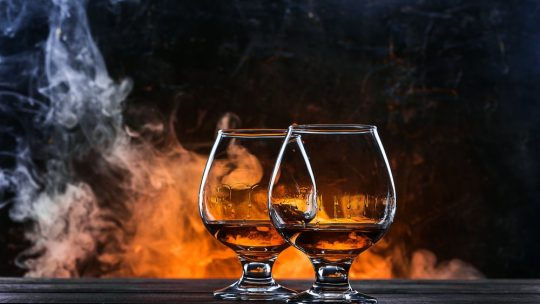
Serving whiskey at too warm or cold temperatures can alter the flavors and diminish the true "expression" of the spirit. It is too warm, and some notes will be overpowering. It's too cold, and the flavors won't be open or fluid enough. This is why Bell and other experts say whiskey should be served at room temperature. A good rule of thumb for whisky tastings is "Straight and at room temperature," says Bell.
Since whiskey is shelf-stable and doesn't need to be refrigerated, you can leave your bottles out to enjoy leisurely. This will always keep them in the correct temperature area, requiring no preparation. If you want to be super specific, 60 to 70 degrees Fahrenheit is the ideal temperature range for optimal flavor.
Not drinking the whiskey straight.

Even casual whiskey drinkers will likely know that there are two general ways to drink whiskey straight: neat, meaning served on its own at room temperature with no ice, or on the rocks, meaning served over ice. But as the ice melts, it can dilute and alter the whiskey's flavor profile, so you're not getting the pure, authentic expression. While you can add ice or water after the initial taste, experts say it's best to serve it straight to taste the whiskey in its proper, unaltered form first. This will help you develop your palate, noticing different flavors, nuances, and complexities. Using chilled whiskey stones is another way to sample whiskey without diluting it.
Then, Bell says, you can add a drop or two of room-temperature water. "Adding a few drops of water may open up the whiskey—it will lower the alcoholic strength and any burn you might be getting and sweeten the whiskey slightly," she tells Chowhound. A pipette or dropper can help you control how much water you add so you don't overpower the whiskey or water it down too much. Some experts also get highly technical with the type or amount of water added, but for beginners, any neutral, room-temperature water will do.
Not pacing yourself with the first sip
Of course, part of the appeal of a drinks tasting is having fun, trying new things, and maybe getting a little buzz going (safely, of course). But you're still doing a tasting, not simply having a drink to unwind at the end of the day or letting loose on a night out. You want to take your time and adequately appreciate the whiskey's complex flavors, not knocking it back immediately or taking a big gulp.
Start with a small sip, taking your time to explore the emerging flavors and mouthfeel. "Take a small sip, let it roll around your mouth," says Bell. "Then take a second sip after the first and start thinking...how does it feel in your mouth?" Take note of things like whether the sensation is light or syrupy. Does the alcohol burn too much? Is it fresh and smooth? If you drink too much at once, you'll blitz your taste buds and lose a lot of that subtlety and nuance.
Since the purpose of a tasting is appreciation and education, a formal tasting at a distillery or tasting room will generally use small amounts of each whiskey. But if you're doing your tasting, you must be mindful of how much you pour. "Be careful with the pour size," says Bell. "I'd recommend a ½ ounce per whiskey, especially if you're trying more than three whiskies. Perhaps think about smaller pours if you're trying lots of whiskies."
Skipping a visual

Tasting whiskey is a multi-sensory experience, and experts like Bell and McCourt want you to make the most of it. Like wine tasting, you want to observe everything about the whiskey, including its color and appearance.
Start with the eyes, Bell says. "We taste with our eyes." Observing the color of the whiskey holds clues about its character, like how long it's been aged. Like gin, whiskey starts as a clear spirit and then gets gorgeous amber coloration from the casks and barrels it's aged in. Darker hues can hint at how long the whiskey has been aged and how much color and flavor it's been able to soak up, so taking a minute to observe the color can " then guide you on what you might expect when nosing and tasting," Bell explains.
You can also swirl it and observe the whiskey's "legs," which are the droplets that will run down the side of the glass after swirling. Thin legs generally indicate a lighter whiskey, while thicker, slower legs indicate a richer flavor.
Not giving it a proper sniff

Then, there's the scents or the "nose" of the whiskey, which can serve up all sorts of different smells like vanilla, red berries, spice, or stone fruits. Experts have other methods, but the main thing is getting a proper whiff. "Bring it [the glass] slowly up to your nose and give short, little sniffs," says Bell. "Don't plunge your nose straight into your glass as the whiskey will be 40% abv or more! So that scent will be quite a shock to the system!"
But you also don't want to be too lighthanded and not get a proper whiff. "When smelling, people often don't get their nose close enough. Get the nose in there and make sure your mouth is open when smelling," says McCourt. Opening your mouth helps mitigate the harsh effect of the high alcohol content, allowing you to focus more on flavor instead of the alcohol's burning sensation.
While it's fun to try and identify the different scents in the whiskey, Bell also says it's okay if you can't suss out particular smells just yet. "Honestly, if you're smelling it and all you can identify is that it's whiskey—that's all good too," she says. "Have some fun."
Overlooking the finish
You may think that tasting and then swallowing (or spitting) the whiskey is the end of the tasting experience. But not so. You also want to take note of the "finish": the flavors, scents, and sensations that linger in your mouth after physical contact with the spirit. This final impression gives you more insight into the whiskey you just tasted, revealing new flavors.
After swallowing or spitting, take a beat to observe and notice how your mouth feels. Bell says to ask yourself questions. How long does the finish last? Can you still taste the whiskey after half a minute or a full minute? Is the flavor changing or evolving? How does your mouth feel? If you find you're not noticing much, try a method called the Kentucky Chew. Roll the whiskey around your mouth and figuratively "chew" on it to expand the flavor. This helps the finish to linger in your mouth longer, allowing you to make note of flavor differences or texture.
Spitting (or not spitting)
If you've ever gone wine tasting, you've likely observed fellow tasters spitting out the wine they've just tried into a spittoon or spit bucket. Spitting out excellent wine? Perish the thought! But there's a good reason to spit while tasting wine or spirits. First, it prevents you from getting tipsy too quickly, which can be a safety hazard if you're driving. Second, it keeps your senses and palate sharp enough to appreciate the remaining drinks in the tasting flight.
Spitting out excess liquid can also be used to taste whiskey, especially as whiskey generally has a higher ABV than wine, and you can get tipsy more quickly. Bell says as long as you're safe, you don't have to spit if you don't want to. "If you're driving, I'd recommend only smelling, then asking if you can take your whiskies away in small bottles so you can enjoy them at home when you're not driving," she says. "If you're trying many whiskies, perhaps think about smaller pours or spitting the whiskey out."
Not drinking enough water
One of the biggest mistakes one can make during a whiskey tasting is not drinking enough water. "Have water during the tasting, especially between each whiskey," Bell urges. The apparent reason is to keep yourself hydrated as you drink, preventing you from getting tipsy. "Be mindful that you are drinking alcohol – so if you feel that you're heading towards one too many, then stop," says Bell.
But there's another critical reason to drink water throughout the tasting, especially between each whiskey. Drinking water between each whiskey — and swirling it around in your room — helps cleanse and rinse your palate in preparation for the next whiskey you'll be tasting. Think of drinking water between each whiskey as a reset. It helps eliminate residual, lingering flavors and sensations so you get a fresh, clear impression of the next whiskey, unaltered by the sample you just drank.
Not considering the tasting order
If you're doing a flight of different whiskeys, consideration should be given to the order. Even if you're spitting and sipping water, your palate will progressively get less sensitive to subtle flavors, so 4-5 options are good. There are different schools of thought regarding the order to taste whiskey, but there are some standard rules to follow.
For one, Bell recommends that each whiskey come in its glass. This prevents flavors from mixing and changing the character of each whiskey. It's also best to start with lighter, more floral offerings before proceeding to heavier options like peated whiskeys. "Peated whiskies should come last as they'll typically linger the most," says Bell. Whiskeys with stronger flavors, like peat, should be reserved for the end of the tasting, as tasting them at the beginning can overpower more delicate options.
If you're tasting at a distillery, the tasting order will generally be decided for you. But if you're going it alone, Bell says to have fun. "There is a load of serious formalities regarding the IDEA of going to a whiskey tasting! But honestly, there are no fixed rules – ultimately, you're there to have fun, try new whiskies..." Don't stress too much about proper order, but proceeding from lightest to heaviest in flavor and type is a good rule of thumb. Some experts also advocate trying your best bottle to get the full effect before your taste buds become desensitized.
Taking it too seriously and not having fun
It's easy to feel intimidated during beverage tastings, especially if you're a beginner. You may be afraid of appearing uneducated or saying the wrong thing. But at the end of the day, it's about trying new things, broadening your horizons, and having a good time.
Bell encourages people to be open and honest. "Have fun and enjoy!" she says. "Be open-minded and join in the conversation! And if you try a whiskey and don't like it, that's all good." Don't be afraid to ask questions, share opinions, and thoughts. Even if you're provided tasting notes, Bell says it's a good idea to come up with your own and share your thoughts and insights with others you're tasting with, respectfully, though, she adds. This is no place for judgment. "Never criticize anyone's tasting notes! We all have different palates, and we all taste different things." That way, everyone can have a good time, whether you're a seasoned whiskey drinker or just dipping your toes into the liquid gold water.
This article was written by Michael R. Grigsby, one of the news editors for LCTI, LLC. Michael is passionate about writing regarding outdoor recreation, photography, strength sports, bodybuilding, and powerlifting. He provides accurate and insightful news reports on diverse topics. He loves connecting with readers and is always happy to answer any questions you may have.
DISCLAIMER
This article is not a substitute for professional medical advice, diagnosis, or treatment. It is purely for educational and informational purposes. You should not rely on this information as a substitute for, nor does it intend to replace, professional medical advice, diagnosis, or treatment. If you have any concerns or questions about your health, you should always consult a physician or other healthcare professional.
LCTI, LLC is an American-based publishing company located in Southeastern KY that is part of a group of authors opening up new publishing venues by producing titles for very niche markets and bringing public domain titles back to life, covering a wide range of topics and interests.


Comments