


Muscle Myth or Fact: Do More Reps Equal More Progress

Updated: Jul 27, 2025
by Michael R. Grigsby July 15, 2025 11;00 a.m. EST
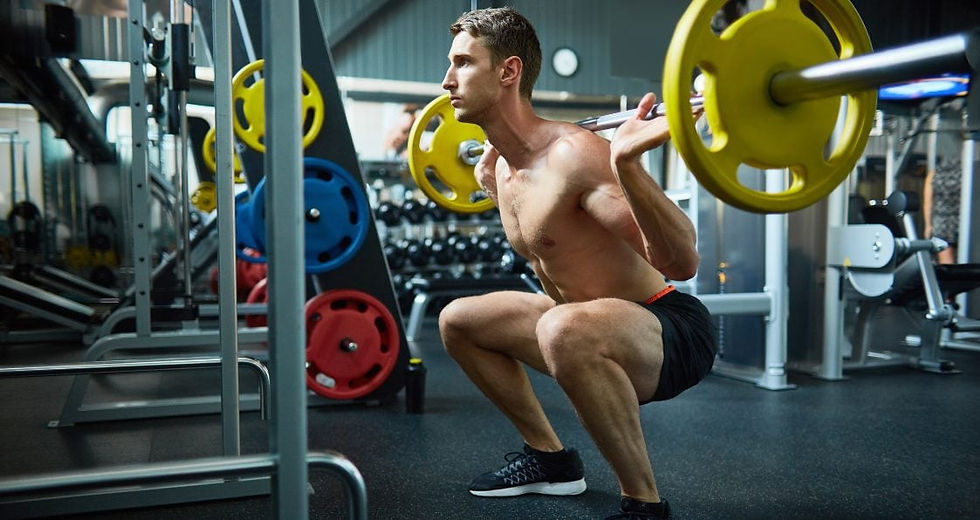
Somerset, Kentucky---Have you ever considered whether performing 20 repetitions instead of 10 could significantly enhance your fitness results? A recent study (Jerez-Martínez, A., de Frutos, et al, 2025) explored this long-standing question in strength training — and the findings are both insightful and encouraging. The research showed that whether participants performed 10 or 20 repetitions per set, they experienced comparable improvements in muscle growth, strength, and metabolic health, provided they trained to the point of muscular
In the study (Jerez-Martínez, A., de Frutos, et al, 2025) participants were divided into three groups: one performed sets using a 10-repetition maximum, another used a 20-repetition maximum, and the third group did not train. Over six weeks, both training groups completed two lower-body sessions per week, pushing each set to concentric failure — the point at which no further repetitions could be completed with proper form. The results revealed significant increases in muscle thickness and strength across both training protocols, with no substantial difference between them.
Jerez-Martinez, Derutos, et al, (2025) found that whether you prefer lifting heavier weights for fewer reps or lighter weights for more reps, reaching muscular failure is a key factor in driving progress. To continue improving and avoid plateaus, progressive overload — gradually increasing the challenge of your workouts — remains essential.
Rather than focusing on which approach is superior, it’s important to recognize that both methods offer valuable benefits. Heavier loads may help you reach failure with fewer reps and less overall fatigue, while lighter loads can be more approachable and allow some individuals to train with greater confidence and consistency.
Regardless of your choice, maintaining proper form and using a full range of motion are crucial to maximizing the effectiveness of every repetition — or, as Arnold Schwarzenegger famously always emphasized, "the stretch and the flex."
Reference:
Jerez-Martínez, A., de Frutos, J. M. G., & Romero-Arenas, S. (2025). Similar improvements in skeletal muscle oxidative capacity after moderate (10-RM) and high repetition (20-RM) resistance training. Journal of science and medicine in sport, S1440-2440(25)00185-9. Advance online publication. https://doi.org/10.1016/j.jsams.2025.06.007
This article was written by Michael R. Grigsby, one of the news editors for LCTI, LLC. Michael is passionate about writing regarding outdoor recreation, photography, strength sports, bodybuilding, and powerlifting. He provides accurate and insightful news reports on diverse topics. He loves connecting with readers and is always happy to answer any questions you may have.
DISCLAIMER
This article is not a substitute for professional medical advice, diagnosis, or treatment. It is purely for educational and informational purposes. You should not rely on this information as a substitute for, nor does it intend to replace, professional medical advice, diagnosis, or treatment. If you have any concerns or questions about your health, you should always consult a physician or other healthcare professional.
LCTI, LLC is an American-based publishing company located in Southeastern KY that is part of a group of authors opening up new publishing venues by producing titles for very niche markets and bringing public domain titles back to life, covering a wide range of topics and interests.


Comments